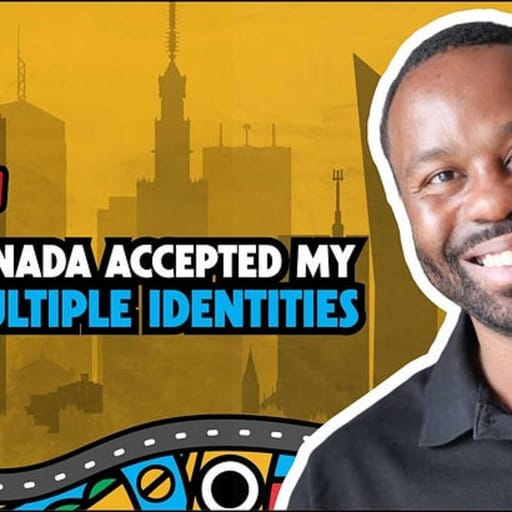
Transcript 0:00 Welcome to the Newcomers Podcast, where I explore what it means to be an immigrant. Today, I'm speaking with Said, the pastry nerd. 0:08 You will understand why I call him the pastry nerd when you start listening to his story. But I think this was a great conversation for me because we tackled something I see a lot. The immigrant is not a monolith. 0:21 Everybody's different. For Said, his parents moved from Comoros to Paris. He was born in Paris, and then he moves from Paris to Canada. And you know what? His father's an immigrant. 0:34 He's an immigrant, but the experiences are different. Social status, in language, education, every single thing, all those things define how his journey and his dad's journey would differ. 0:46 But you often you see people who keep saying, "Oh, this is who-- the, the immigrant." No, everyone is different. But let's get to the story, please. 0:54 [intro music] So Comoros to Paris. When you're a kid, you don't... it doesn't mean anything to you. 1:11 It's just, oh, mom and dad are saying, "Let's go somewhere else," and you move. And then Paris to, to Canada. What do you... 1:21 Like, I think, I feel like I wanna kinda start off with go- I'm going to deep end right now, which is, do you understand your parents better now? Um, 1:31 so, so it's interesting because I-- So I was born in Paris, so I didn't even have any- Oh. -experience of immigration. No, it's okay. It's okay. I didn't have any experience of immigration. I didn't know what it was. 1:43 I was just like, "Oh, I'm here," and my parents told-- are telling me that they moved from Comoros and that it was difficult. But you don't get it because you are, you-- for you, you are born in the country. 1:55 That's the only country you know. You, you, you don't really understand. 1:59 But it's only when I moved to Canada that I started to think, "Oh, wow, like, I cannot imagine that they had to go through, uh, everything that is related to administration, anythi- anything that is related to job searching." 2:16 And especially because it's harder for me to understand because, um, they moved to Paris. My, my father moved to Paris without a job, without university education, um, my-- and my mother as well. 2:32 So they both, uh, were in different, in a different situation than me, where I moved to Canada speaking the, both official languages, with a job, um, and, and with a PhD. 2:45 So it, it-- the, the situation is quite different, but at the same time, I understand more just the fact that you go in a place where you have your friends, you have your family, you have everything that you know, and all of a sudden you're almost by yourself, right? 3:01 You know, if you, if you really reflect on that, like, I think, I think, you know... 3:05 And I, I like how you called that out, that, that thing, because it's so true, like, that, the fact, the education, social status, you know, language barriers, like, just they are all different. They're so... 3:18 We, we, we tend to assume that they're just there, but they're not just there. They're like, they're massive barriers that help, either help or limit us in how we engage with our new society. 3:32 And, and then, you know, you know, when you reflect back on your father's journey and your journey, was any of that helpful in just kind of understanding some of the things you're seeing? Was it helpful in 3:45 helping you approach it with more empathy or patience for yourself? Because I think one thing about an immigrant is that we are always in a hurry. Like, we're in a hurry to kinda get going. I wanna settle down. 3:53 I wanna, I wanna get a job. I wanna get a house. I wanna do a ton of things. 3:57 But if you reflect back on your father's journey and your journey, what-- Did you-- Did that help you at all, or did you still get into the immigrant checklist thing mentality? Um, I think it helped, but not so much. 4:12 Uh, I think I also really wanted to settle as quickly as possible, to have everything ready, to, to have all the furnitures. Uh, it's... You know what I mean, right? 4:22 When you move to a country and you're like, "Okay, uh, I don't have a couch. I don't have a mattress. I don't have a TV. I don't have anything. So what should I do now?" And 4:33 but it still helped because I remember that for my father, like, before he was stable and, you know, settled, probably took until I was fourteen, something like that. So fourteen years. So ten to fourteen years. 4:49 It takes a lot of time to settle into a new country, to get your habits, to, you know, to just get it going. So it helped me a little bit. I think it helped me... 5:00 Yeah, I think it also helped me understand him more and how difficult it must have been with him. But yeah, for me, I, I, I was a little bit nicer and more to myself because I knew what it was like for him. Yeah. 5:16 But gosh, like, you, you're helping my mi-- I, I've been here four years. So when you tell me it takes ten to fourteen years, I, my heart, my heart [laughs] I mean, I, I, I think... So I've been here for ten years. 5:28 I've moved from Paris ten years ago, and I think that I started to feel comfortable, at least okay, after six to seven years. 5:39 Um, and ten years now, now is the time where I'm like, okay, I speak the language fluently. I'm comfortable. I know where to go. 5:49 I know to, how to interact with people, because it's one of the thing that people don't tell you sometimes about immigration is that the difference of cultures. Yes. 5:59 And even, even France and Canada, which seem like very similar c-culture, they're actually not really the same.Yeah. 6:07 Let's, let's, let's kind of stay on that point a bit because like, you know, that thing about cultural nuances, I feel like especially because Canada is a very interesting country in the sense that Canada doesn't-- people in Canada don't tell you when you're not doing the thing. 6:21 People just, people just look at you and make a judgment call and ignore you. I, I-- it's frustrating to be honest. I'm like, "Just say to me, this is how I should do this." They're like, "No, you should..." 6:35 I'm like, "If you don't tell me, how do I?" [laughs] I, I, you know, I, I got into, uh, uh, arguments, let's say, with my Canadian friends because sometimes I will be telling them exactly what you said. 6:49 I would be s- I would be like, "Please tell me if I do something wrong." I d- And I know that from their point of view, they will be like, "No, we don't wanna tell you something bad. 6:58 We don't w-want you to feel uncomfortable. We wanna be polite. We wanna be nice to you." But then I would say, "But how will I ever learn that I'm not doing the right thing?" 7:08 Or for example, sometimes with my English, I would say things, and I would not say it correctly, and nobody will say anything. 7:16 And it's, it will only be after, I don't know, two, three years, people will be like, "That's not how you say that actually. Um, the accent is not right. Uh, I do not understand what you're saying." 7:32 But yeah, some- it's, uh-- whereas the French culture, oh, they, they don't- They tell you. It's the oppos- it's the opposite, b-but it's too much as well. 7:43 Like, if you're not pronouncing something correctly, they're like, "No, that's not how you say it. That's not how you say it. Repeat again. Repeat again." [laughs] Okay, that's a lot. That's a lot. That's, that's a- 7:55 It's, it's too much. It's too much. I'm, I'm not saying it's good. I, I would like something in between, right? Yeah. Uh, because French, French people are very direct, very in your face. 8:05 Um, Comorian people as well, like my parents' country, they're also direct, direct. Uh, they would not, you know, just pretend and say, use 12 sentences to say no, unlike in Canada. 8:21 [laughs] You know, ten years in, do you still think that you-- I mean, I know you said you feel more comfortable right now, but if you had to just kind of 8:31 put that comfort on a level of one to ten, how comfortable are you right now after ten years? After ten years, I would say I'm at, um, I would say eight to nine. Yeah, eight point five I'd say. Yeah. That's good. 8:45 That's good, actually. So now do you f- like, do you now pick up all the... 8:50 'Cause I think the thing about Canada that I, I'm trying to learn is, you know all this, the unspoken truths, the unspoken nuances, the things that, the looks that tell you that, "No, that wasn't done well." 9:01 Do you-- c-can you pick them up yet now, or do some still fly over your head? Um, I think some of them might fly over my head. Uh, I, for example, one of the thing I'm not really great at, 9:17 so I'm, I'm not really great at writing emails where I say no without saying no, because I'm not supposed to be, um, uh, I, I, because I have to be polite, right? 9:30 So I can, I know, I, I understand those, n-those emails now. Like, I would read an email, very long email saying no. I would be like, "Okay, I think that person is telling me no," but without really saying it. 9:43 This I get, but I don't know how to write these emails. Uh, so I'll... Y-you know what I mean? Yeah. Uh, like, like those email when you say, when, uh, someone is asking you, "Do you wanna go out or not?" 9:54 And you, and you'll be like, "Hey, John, uh, today I'm very busy, and I don't know how I'm gonna do this and this and this," and, but they never say no. That's the kind of email I'm not great at. 10:07 Gosh, I love this country. [laughs] Just tell me no. Tell me no. It's okay. I'm not gonna die. Just tell me no. Yeah. Tell me, tell me, "No, I don't think we can do this." Or I don't know. Like... 10:24 And you know, it's right because back in Nigeria too, we, we can be very... I feel like Nigeria, we're a bit in between. 10:29 Sometimes we can dance around the bush, uh, but then we can also be very direct and in your face and just say to you as is, um, sometimes rudely though. 10:38 I mean, I think, I do think we have a couple of cultures that don't do that, you know. 10:43 Um, but coming to Canada was, it was, this is my first time in, in that, in that culture, and then it doesn't help that I've worked with Americans a lot. So I'm always- Mm-hmm... it's always a very 10:56 huge switch for me 'cause like the Americans just say to you, "Oh, dude, that's not good. Uh, that doesn't work. No, I'm not doing that with you." Canadians are like, "Uh, yeah. It looks, it looks great, you know. 11:07 Maybe you could put the color red on it." Yo, go, go put the color red on it. [laughs] Y-you know, now that I think about it, actually Comorian have some kind of indirect way to say no. 11:20 Uh, they will say Inshallah, which mean if God wants. [laughs] Okay, that's hilarious. 11:28 So i-if they don't want to say something, if they don't want to go somewhere, or if they're not sure if this is going to happen or not, they, they, they wanna say no without saying no. 11:38 They, they, they defer to God almost, right? They're like, "Inshallah, you know, maybe it's gonna work, maybe it's not gonna work. Inshallah." 11:45 So it's, so they also have that kind of indirect culture, but most of the time they'll be direct as well. Yeah. Okay, there's something else I wanna explore with you. 11:55 Um, and it's, it's a pretty interesting topic because... And for, I think for me with you, it's actually really interesting because, you know, you know, listening to talk about people say the immigrant. 12:06 So it's like, it's almost like as if the immigrant is some monolith. So they're justSo, so in at best it's all the European immigrant or the Black immigrant. 12:14 And you just even listen to your story about your dad who moved to, from Comoros to Paris, who's an immigrant, and then you're his son, and then you move from Paris to Canada. You're an immigrant. 12:26 But two of you, same genes, same people, entirely different experiences, entirely different immigrant stories, entirely different perspectives of what immigration means. 12:37 And I just wanna kind of, kind of explore that with you a bit about that misconception, if you've come across it. Any thoughts on that? 12:43 And, you know, like how-- 'cause i-it's always such an interesting conversation where people, you know, kinda just paint everyone with one brush and go like, "Oh, you all are this." 12:55 And I'm like, "No, that's not how it works." Yeah. 12:59 I, I, I also think that it's very interesting to see, uh, how people see, uh, immigration as a monolith, uh, especially because when you, when you look at, for exam-for example, people tend to say a lot, "Oh, African immigrants, they are coming to our country, and they're j-they're like this and like that." 13:19 And I'm like, "Which, which African immigrants? Which, which are you talking about? East Africa or West Africa?" 13:25 And even if you, e-even if you look at East Africa, like, someone from Ethiopia is not the same as someone from Comoros, is not the same as someone from R-Rwanda. It's so different. 13:36 We have kinda similar culture, but still very different. We cannot understand each other. We don't eat necessarily the same food. Yeah. 13:43 Um, and even the le-- the difference is even bigger between someone from East Africa and West Africa. West Africa. Like I... 13:52 Sometimes I go to functions or to potluck where there are West African people, and I'm like, "I've never had any of this food. I don't know this. Uh, what is that?" And I have to-- And... 14:06 But, but I th-I think that for many people, the perspective is we are all the same, we all eat the same, we all speak the same, we have the same culture. And I know it's the same as well for, for people from India. 14:20 Like, like people who know-- If you know some-someone from India, they will tell you that the north and the south are not- Very different...the best friends. [chuckles] They're, they're very different. 14:29 They have a very different culture. And on top of that, on top of, um, the-- anything that, uh, the geography... 14:39 Like let's say if you, you take two person from, uh, Comoros moving to, to Canada, well, they might not have the same experience if they are not from the same social class, if they don't have the same education. Um, 14:56 all of these showing that we're just not a monolith at all. We're ju-we just have different experiences. 15:04 And, and I wish that people see us, would see us a little bit more are individual humans with their specific perspective than people coming from that country, and they're all the same. Yeah, it's tiring. 15:20 Do you have any thoughts on how you think we can drive that conversation? 'Cause I think about it a lot is like, how do you even, how do you even start to tell-- help people see those differences? Any thoughts on that? 15:35 Uh, it's, it's, it's kind of difficult. Uh, I think one of the way, obviously, would be to, 15:41 uh, ask people to go to community, uh, community events, uh, just so they can see, they can experience, one, experience a culture, two, see multiple, many people from that same culture and realize, oh, they're not all the same. 15:59 [chuckles] Like some people are, I don't know, they're just not all the same. Um, the other thing, um, I guess read. 16:09 Uh, I-- and I'm saying that because, like, there's, um, the, there's, there's that book that I'm, uh, presenting right, uh, soon on, on CBC, Canada Reads, and that there's that book called Dandelion where I actually talk about how... 16:24 That book actually talks about how different immigrants have different experiences depending on their country, depending on the, on their social status. Yeah. But apart from that, it, it's difficult. 16:35 I think, uh, people just need more exposure to other cultures. Yeah. Yeah. 16:41 I mean, I, I'm, I'm gonna find that book, that Dandelion, honestly, 'cause you've talked about it on the pre-show, and you talk about it now again. Um, I wanna talk about your immigration journey. 16:50 I wanna go back, but I think we'll end with that. But I think the theme I wanna explore with you is, so i-if you think about your identity, like who are you right now? Like, I mean [laughs] who are you? Uh, that- Yeah. 17:07 O-okay. That, th-that's something that I struggled w-with for a long time. Like, who am I? Um, and it keeps changing, I find. And it, and it changes depending on, uh, my age and where I am. 17:24 Like for example, in France, I tended to say, "Oh, I'm French," 17:28 because French society doesn't like people who are from outside, so they always tell you, you have to be French, and that's the only thing that you are, and that's it. 17:38 But then when I moved to Canada, I realized that, huh, I can hear actually people let you be who you wanna be to a certain extent, okay. Uh, let you be who you wanna be, and it's okay to say, "I'm Comorian French." 17:53 So that's what I would say in the first years here. I would be like, "Oh, I'm French Comorian." Um, but now I've been here for so long, and I became a citizen of Canada, 18:03 and, and I've realized that I'm doing things that Canadian do, uh, and without even noticing, like saying sorry all the time for no reason. Uh- [laughs]...and, and, and I'm like, 18:14 and I'm like, "No, actually, I think-"Not I think. I am French, I am Comorian, I am Canadian, and I know that sometimes people ask you to choose, like, what are you? Which one are you out of the three? 18:29 I, I think I'm all of them at the same time, and it depends on what I'm doing, and there are things that I like from one culture or from another. Yeah. 18:40 You know, because you remind me of an episode we just-- I just went live with a lady called Marowe Rosie Mbba. She's, um, Zimbabwean Canadian, and she talks about how heritage is the thing. 18:53 So like your heritage, you have Comorian heritage, French heritage, and now you have Canadian heritage 'cause you've lived here for ten years, and so whether you, you build that part of you 19:03 and your identity at each point in time is kind of morphing based off the context and what is feeding off from the heritage you have. So that's what's showing up, you know. 19:14 You know, and, and I like, I like that thing you called about how the world always wants us to take, stake a claim. But what if the claim is really just dependent on the context? Like, you know that kind of thing. 19:25 'Cause what- Yes... it was always like, "Oh, decide." But like, why should I decide? Because really, if you went to Comoros now, 19:35 even if you're not fully Comoros and they will know you're not, but there's a part of you that will resonate with what's happening in that place. 19:42 Because whether we wanna accept it or not, living with your parents for a while meant that they left a part of themselves in you because they raised you. Mm-hmm. Now you spend time in Canada. 19:52 So, you know, so it's such a, it's such an interesting conversation to always have because I think some people always only gonna hold on to a pillar, and then they find out at some point that they are dealing with 20:03 what I call that existential question, like, "Who am I?" Because I'm holding on to the Canadian side of myself, but my French side keeps calling me. You know, it's-- 'cause it's there. You can't, you can't, 20:14 you can't scrape it out. Yeah. I cannot extract it out of me. Yeah. Yeah. I cannot extract it out of me, and it's, um, because sometimes if I don't speak, like, uh, how can I say that? 20:29 Like, sometimes people see me, and they, they know that I have Comorian heritage, and, and they want me to talk solely only about the Comorian heritage. 20:42 And, and, and I'm like, "But you, you know I was born in Paris, I was born in France. I s- at my first thirty years I was there." That's the-- I, I actually know Paris way more, France way more than Comoros. 20:58 I, like, why, why d- why are you so s-stubborn about Comoros and, and like, and you're like, "This is your place. This is your place." And I'm like, "Yes, it is, but can we talk about Paris? 21:10 Can, can, can I talk about this part of myself because that's also part of me?" I would actually almost even argue that you're actually more Parisian than Comorian, to be honest. Like y- Yeah... 21:23 because your Comorian heritage is really just, um, I don't, I don't know what the term is. 21:28 It came to my head, but it's, you know, the term of where it's like diffusion in science, literally, where whatever heritage you have from Comoros 21:37 is either diffusion or osmosis because your parents, you lived with your parents- Mm-hmm... and then that's just what you picked. 21:42 But in terms of what's the overriding heritage and identity that will show up most of the time before you move to Canada, it's probably more Parisian like than, you know. 21:52 It's, it's more Parisian, and it's not that I'm ashamed or I'm not proud of my Car- Comorian- Yeah... Comorian, uh, heritage, because sometimes people think that. 22:02 But like you said, the only experience that I had from Comoros are my parents, which is very limited, so it's their experience in their village- Yes... or whether, uh, or when I would go there on vacation. Yeah. 22:15 And, and I used to be hurt when people told me, "Oh, you're not, you're not Comorian. You're not..." I, I used to be so hurt, but now I understand, like, like if I had kids here- They're not Parisians... 22:31 like, they're not Parisians. [laughs] They're not. They don't know what it's like to grow up there. They don't know the culture. They, they, they will learn a few things through me, um, but that's it. So it's, um, 22:47 yeah, it's interesting. It's like language. It's like language. 22:49 It's like, you know how they say, and I've, I've had people on the pod who say, so you, they are, they're about to move to America, for example, so they go learn English in a class, in a class setting. 22:58 They spend two, three weeks, they learn English. They think they know English. Then they land in America, and then someone says, "Hello. So how are you doing? What's going on?" They're like, "Oh, I don't know." 23:09 [laughing] You know, they're like, "Uh, sorry, you said what?" I mean, I, I have an, an episode of a lady who says that she walked into a, 23:16 a store she was serving, and pe- they, they were talking around her for like twenty minutes. She didn't know what anyone was saying. They were talking too fast. 23:23 They were saying, using words she couldn't-- like it was like, how, how do you use this? 23:27 But she had spent three weeks learning the language, and I think culture is like that, too, when you're learning from your parents, is that you un- you don't even understand it. You just know it at some level. 23:41 But then when you see it in action, you don't even, you don't even pick up the, the things that triggers that particular cultural expression because you haven't lived it, you know? 23:52 So it is strange when people do that, and 'cause I, I understand when you say people say, "Oh, you're this." 23:57 I'm like, or someone's talking about my kid, like, oh, he my-- 'cause my, my second kid was born here, and it's like- Mm-hmm... well, he's gonna be Nigerian. 24:03 I'm like, "Yeah, he's gonna be Nigerian Canadian," but the truth is that he's gonna be more Canadian than I actually say. They are, my kids are Canadian Nigerians. I am Nigerian Canadian. Mm-hmm. So I'm more Nigerian 24:15 c- than them and, but they're more Canadian than me, so d-So it's-- And so for me, there's that cultural thing. That's really who I am. So I'm Nigerian, then Canadian. 24:26 For them, they are Canadians first, then they are Nigerian because, oh, daddy is Nigerian. Daddy behaves like a Nigerian. 24:33 So they won't-- And they, they'll think I'm weird, to be honest, 'cause like you-- I'll do things, they'll be like, "What are you doing?" Like [both laughing] you know. Like, "What are you actually doing?" 24:43 And my, my kid, my eight-year-old does that. Sometimes he's like, "Daddy, no, that's not how to pronounce that." I'm like, um, yeah. 24:50 [chuckles] But a-and even i-it, it's so true because even if you've been here for so long, like even for me, after ten years, sometimes I do things the way French people do. 25:01 Like, I will start complaining in front of everybody, and, and [laughs] and if you do that in front of Canadians, they're like, "What? What is he complaining about? Why is he so loud? Why is he..." 25:16 I'll be like, "Oh, shoot. Okay, I'm gonna, I'm, I'm gonna stop talking." Yeah. Yeah. I think so, I think w-w-to round up, I wanna kinda talk a bit about, um... 25:28 So I find your story interesting in the sense that PhD in neuroscience and stuff, and then you come here, and then you decide to do pastry work. Like, tell me, like what, what were you thinking about when you did that? 25:39 Like, because that's a massive switch. Like, it's like how-- Th-they aren't related at all. [laughs] It's, it, uh, what I was thinking about is that I was not really thinking. I just moved here from Paris, and I, 25:57 and I started missing some parts of the culture. Mm-hmm. And I started realizing how French I was, how Parisian I was, uh, and I wanted to eat croissants. 26:07 I wanted to eat French cake, French dessert, patisserie, and I-- and in Calgary, there's not so many. So I, I-- that's why I decided to bake them, to learn how to do this by myself. 26:20 And it's only after a few years, uh, after like five, six years, that I decided to start a business. 26:27 But, you know, ju-just going back to, um, I think that plays well with, uh, the different parts of a person and th-their different identities and cultures because my grandmother was, she was a vanilla farmer. Oh. 26:42 So because she was a vanilla farmer, and vanilla is really used in French pastry- Yeah. So for me, when I'm baking, and every time I'm using vanilla, I'm thinking of Comoros. I'm thinking of my grandmother. 26:57 I'm thinking of her, uh, sorting the, the vanilla pods. But I'm also thinking of Paris. I'm thinking of the bakeries. I'm thinking of all of this, right? 27:05 So s-so actually, like f-pastry, for me, it's kind of a reminder of both, and I think that's one of the reason why I decided to change careers, just because it's-- was always a reminder of who I am as I'm baking. 27:24 And I started to love it more than science. I still love science, but I started to love it more than science, so that's why I went head-on there. That's so beautiful, actually. You know, I-- it reminds me about a thing. 27:35 I think, uh, we talked about it, about the, the series you're working on. But you know how the idea that food is identity, like, like food is ident-- We, we, we gloss over it, but like f-food is identity. 27:48 It's a memory bank. It's, it carries a ton of things, all the flavors, everything. You know- Mm-hmm. Reminds us of home, tells us of who we are, reminds us of things that we've forgotten, all that kind of stuff. 28:01 Yeah, and, and, and when you talk a-to immigrants, even if you talk sometimes to second, third generation, 28:08 what I always find interesting is that very often you will see that things disappear, like the language disappear, the religion disappear, some of the customs and tradition disappear. 28:20 But the thing that lasts the most, the longest time, is food. Like, I've met people, I've met so many people who've, who will tell me, "Oh, you know, my great-grandmother was Portuguese. I don't speak the language. 28:34 I've never been there, but I know how to make this Portuguese bread because that was her recipe." And, and- Dang. And I find it so interesting that 28:44 food carries culture, um, across generations, uh, across continents sometimes. 28:54 Gosh, like that is, that is so-- I, I've never thought about it that way, but I mean, but it absolutely makes sense considering how we pass on spices and stuff all the way down, recipes. 29:04 You know how they talk about all these restaurants in Italy where the sata- the starter dough for their pizza has probably been around for like hundred years. I'm like- Yes. I'm like, how are you all keeping that alive? 29:15 [laughing] 'Cause people just wa- just wanna keep a part of their heritage, of their family, of their identity all the time and just a little bit of the time. 29:26 And food is-- When you have good food, like you, it just evokes some emotion that stay with you, and it nourishes you at the same time, of course. 29:37 Um, so I, I think that's why food is always such a big part of the immigrant journey. Uh, and if you go, y-you will always see... 29:46 Um, so it's always funny because my parents, when they were moving from, I mean, when they were going on vacation to Comoros and coming back to Paris, they were always bringing with them, uh, some Comorian food, some mangoes, some things like that, you know, in, in their bags. 30:02 Whereas me, [chuckles] when I'm, when I move fr- when I go back from Paris to Canada, there's always some cheese, some butter, something like that because you want to get, you know, you wanna remember how food is like in your country. 30:17 Yeah. I think this is a good place to end this. We're talking about food. [laughs] Well, thank you so much, Saheed. Like, this was really good talking to you about all this. Um, God, thank you so much. 30:28 [laughs] Well, thank you. That point on food is something to think about. Um, but yeah, you know, that thing he said about where food is the thing that lasts the longest within generations. 30:40 Like, it's something to think about. But again, thanks so much for getting to this point of the pod. Um, if you know someone I should talk to, please send them my way. 30:49 If you know someone that will find this useful, please send to them. As always, please like, share, subscribe, you know, comment. You know, we're YouTube and Substack. 30:59 We're on anywhere you get your podcasts, you'll find us there. Thank you so much, and have a good day. [outro jingle]