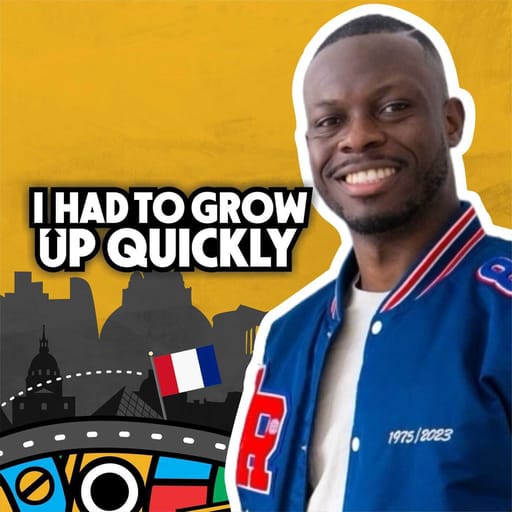
Transcript 0:00 Tobi inspires me in a lot of ways. He's one of those immigrants who, who just seemed to have it all put together, to be honest. 0:09 [chuckles] You know, so he was, it was really good to get him on the podcast to talk about his life and how he approaches things, you know. And we did exchange a lot of interesting stories. 0:22 Like, I found that he dreamed of playing for Arsenal, and he actually went for trials in London. You know, I found out he came to Canada against his will. I also shared a story of mine that I rarely talk about outside. 0:32 You should listen if you wanna hear about that story. It's a story about my football career that almost picked up, but then s- went nose dive down. 0:44 But if there's one thing that you take from this episode, it's something Tobi said. He says, um, in life you get-- he believes that in life you get unlimited tries. 0:54 And I think for an immigrant, like that's a really good frame of mind to use or to have when you're approaching anything. Because like you're, you're experiencing so much change, and sometimes it's not gonna work out. 1:08 Sometimes you're just gonna fail. Sometimes you... A lot of things will happen, but you know what? You get up and you try again. Let's get to it. [gentle music] Welcome to this, Tobi. 1:24 Like, I am super excited to do this with you because, like I was saying to you at the pre-show, I think you're the perfect example of when someone switches off that survivor mentality from day one. 1:35 Like, because you're-- with- as immigrants, like sometimes you come from somewhere, you come to a new country, and like you said, you're at peace and like, what else? You know, like really, what else, you know? 1:46 But you know, I wanna kinda go back to like how, why, you know, what led you saying to yourself, "Okay, you know what? I'm gonna leave Nigeria and come here." [sniffs] I mean, I came to Canada against my will, you know? 2:01 So- [laughs]... you know, that, you know, I, I never take credit for being in, in Canada. My-- at the time when I finished from, uh, year 11, I said to my dad, "Listen, I wanna be a professional footballer. 2:13 I wanna play for Arsenal," you know? [laughs] I even sat my mom down. I said, "Listen, I'm gonna buy you a Rolls-Royce. Don't worry, I'll play for Arsenal left wing," you know? 2:21 But at the time, my dad was just thinking like, you know, "We need to make sure the kids are set up," right? So he- Yeah... he actually paid for school fees in Canada before he even consulted me or anyone. 2:35 He was just like, "You're going to Canada." And I remember just crying. I was like, "Why are you sending me to somewhere where there's just snow and moose? Like, what am I supposed to do there?" You know? 2:45 And it was so, um, jarring at that point because we didn't know anybody in Canada, you know? And so I came to Canada as a, you know... I landed before my 16th birthday, went to, you know, boarding school in, in Hamilton. 3:02 And I quickly realized like, okay, I have to figure out, you know, life on my own. But I was raised moving around, right? 3:11 We moved from Nigeria to Belgium, Atlanta, Tennessee, back to Nigeria, so I was already kind of comfortable, you know, going out. 3:18 I think at that point I'd already been to like 10 schools in my life, you know, starting over, building friendships. I always lean towards the same things. 3:25 I go play football because I'm good enough for people to, you know, you get 22 friends, you know, right off the bat. And then I always just lean on my humor, you know? I like to make jokes, right? 3:38 So that's usually how I assimilate. But that was how I got to Canada, you know, and e- I didn't even wanna go to university. 3:46 So I told my dad, "If I get all A's in this place that you sent me to, I don't wanna go to university. I wanna go back to England and try to make it as a football player." And he agreed. So I got all A's. The next day, 3:57 we were in England. I tried out at Stamford Bridge, I tried out at the West Ham Stadium. Like, you know, we got into an academy, and then they were like, "Okay, where's your work permit?" 4:08 And at that point, it hadn't even clicked for me that footballers were workers. Huh. I thought they just received their 200K- [laughs]... through PayPal or something, you know? 4:18 Like, it didn't even click for me, and that was pretty much where the dream died. It just... It d- it didn't click for me, you know? And so that was pretty much where it ended. 4:27 So I came back, played, you know, soccer for my university, and that was when I realized, like I wasn't gonna be a m- you know, I wasn't gonna be financially stable as a soccer player in North America 'cause it wasn't developed enough. 4:39 Yeah. Right? I was like, "I'll make more money running businesses than I would..." I mean, at that time, soccer players were making, you know, 50 to 100,000. Mm. 4:48 And there was a guy on our team that was the best player I think I've ever played with that didn't make it. Damn. And sometimes you just have to look in the mirror and be like, "Listen, if this guy didn't make it, 4:58 you know, I don't know how I'm supposed to do it." Not, and not out of determination. I, you know, I, I always say to my students, whoever I coach, I'm like, "I'm not an idiot," you know? 5:07 I'm very self-aware in the sense that like I know where I can go, and I know where I can't go, right? Mm. 5:14 But that was how that soccer dream died, and that's how entrepreneurship kicked in, 'cause I still had the life that I had dreamed in front of me. I still wanted to buy my mom a car. I still wanted to retire my parents. 5:26 I still wanted to travel. You know, I still wanted to, you know, have, you know, all these experiences, and I wasn't gonna... You know, there's more than one way to get to the life that you want. Yeah. 5:39 I, I like the idea of more than one way to get to the life you want. Curious about something. 5:46 Like, when you now made that switch, and I hear you about being self-aware, but when you made that switch from, okay-- like actually there are two switches I wanna ask about. 5:53 The first one is the switch where it's like, okay, I need a work permit to make this work, and then you now say, you know what? That means I have to go to school. Like, how did you manage that emotionally, mentally? 6:02 Did you-- you came back to Canada, right, to school? Or you're likeWhat are you gonna do with it? Yeah, I came back to Canada. I mean, I cried. I remember crying on the train. 6:09 Um, I even had a girlfriend at the time in England. We were supposed to, you know, and she was just like, "Listen, I'm not waiting for you." That was the end of that relationship too, you know. Oh, shit. 6:16 [laughs] So, I mean, it was such a devastating way to end it. Yeah. So I came back. But I, I, I say to people, like, uh, when things go wrong for me, I, I always follow the same kind of processing pattern. 6:30 I always cry it out because if you can't process it and you can't let it go, you become a hindrance to your future self. Because now you're pessimistic. 6:47 Now you go, you go, "Oh, this didn't work out, and I remember the pain from that. I never processed it, and I don't wanna feel that pain again, so I'm not gonna try again." But in life, you get unlimited tries. 7:00 You can try as many times as you want, right? But it's the courage to try again and again and again. So I cried it out, came back, found the next best thing, right? Which is always fine, just find the next best thing. 7:13 Um, and I just played football and, you know, did what I, I could, and I still enjoy it till today. But maybe I wasn't the, you know, supposed to be... 7:23 Maybe I was gonna be one of the injured footballers like Hazard or- [laughs]... you know, I don't know, you know. But I feel like the life that I have now is, is, is fine. 7:33 This is not just fine, this is the life that I had dreamed of when I was, like, 20. Mm-hmm. You know why I find this, your story funny is because I have a similar one. Like, I played soccer a lot as a kid. 7:45 Like, played really- Mm-hmm. I was really good. Like, I was so good I was called Ronaldo. That's what they used to call- [laughs] My nickname was Ronaldo. That's, that's how good I was. 7:53 And still up to today, if I play, if I-- I don't play that much anymore because there's no time. Yeah, I have two kids. But when I play, people go, people always ask me, "Why did you not play soccer professionally?" 8:03 This is when I decided to play. And I remember I traveled to Egypt actually for th- I went to Egypt for trials, played there for, like, three, four months. Oh, wow. My agent was a horrible one. I sold my phone for... 8:16 I had a ticket with me. Wow. I sold my phone for f- for... 'Cause my agent wanted me to sign a really silly contract. I called my mom. She's late now. God rest her soul. She's like, "Just come back home." I sold my phone 8:30 for, I forget for how much. Used the, used the money to move my ticket forward. G- I took my bag, my bag, just my bag, and went to the airport. When I got to the airport, I said I was going. 8:44 God, like, I, I still think of how stupid what I did. Some guy approaches me. I don't have any money on me. I don't know how I'm gonna get home when I get to Nigeria. Some guy approaches me and says, "Hey, 8:54 I have a big bag of ladies' sandals. I'm looking for someone to help me move it to Nigeria." Like, I s- anytime I think about it, I'm like, "Dushyi, what if there were drugs in that bag? 9:05 Like, Dushyi, what were you thinking?" He gives me $200 to do that for him. All I just- Oh.... need to do is put the-- Because all I was carrying was a bag, so I had space. Like, I was, my, my ticket gave me two bags. 9:18 Yeah. All I had to do was just take that bag. So all I did is I take the, took the bag, check it in. [laughs] God. Wow. I get to the Nigerian airport. The customs lady looks at me. "Who has it?" 9:30 I'm like, "It's someone outside." She, "So what's inside?" "I don't know. It's just slippers." She cuts it open. You know what, Tobi? I'm not even thinking about anything. I'm just like, "Madam, just do, let me go." 9:39 She cuts it open, pulls out, like, two or three such slippers from it and says, "Go." I-- That's, that's how I crossed. I take the bag, give it to the guy at the, at the... 9:49 I remember, I actually remember the guy coming to meet me at the entrance and saying, "Thank you so much." 9:54 I say, "Well, this customs lady cut it open and took a couple of sandals from it," because she was like, you know how, you know how Nigeria can be. Yeah. 10:01 And I just walk out of the airport, use the money, change the money, the dollars, the $200 to naira. I think it was, it was about 80,000 naira at that point in time or so. 10:09 But that was enough for me to get a taxi to take it to my uncle's house in Lagos. Wow. [laughs] That, that, that is cutting it close. 10:19 Bro, like, that, like, you know, now that I'm much older, every time I think of that story, I always say to my wife that, you know, I've had so many close shaves with stuff that like probably had changed the trajectory of my life completely. 10:33 Yeah. Like, completely. 10:34 Because if there was something was wrong in that bag, or if something was in that bag and somehow it just managed to scale through and anything had happened, like, what are you gonna say to the NDLEA? 10:45 I mean, dude, you're with the bag. Just going to jail, first of all, while we sort out- Yeah. All types of-... while they try to defend yourself. Yeah. You know. 10:54 Um, but, but now, um, so now back to, back to Canada, schooling. I like, I feel like I... Just looking at you and you telling me your story now and just seeing how you've navigated life so far, you know, 11:09 it feels like you've literally been an immigrant all your life. You've moved across countries, moved across schools, and all that stuff. 11:14 But I'm just curious, like, now you had just gone through, like, something devastating. You are in ch- you're, uh, basically restarting life afresh. You moved back to Canada again. 11:25 How was it settling in this time around? Because I feel like the first time when you settled in, you were like, "Okay, Dad, once I score all A's, I'm leaving this town." This time around, it's like, "Okay, I'm here." 11:38 Like, so how did you-- What was, what was the mental thing? What was going through your mind at that point in time? I think I was a simpler man back then. 11:46 As long as I could play football and I had some friends, like- Mm.... it didn't really matter where I was, right? So I settled back in pretty well. I was like, "Okay, I guess I'm staying in Canada." 11:57 Um, you know, I played football as often as I could, played for the school, played pickup. Um, and I, I had a good time, you know? So-Really, it wasn't until 2014 when I moved to France, um, uh, on exchange. 12:12 I did an exchange program as part of my, you know, international business degree. 12:17 And I came here, and I saw life here and how they are and what it's like and, you know, being able to travel and the trains and all this stuff and the football. 12:26 And that was when I was like, "Okay, I think we're gonna move one more time after I finish school." So I actually left some things in, in France back then. 12:33 Um, and I went on, you know, just go finish school and come back. But, you know, Canada, you have to get your work permit, then you gotta get your PR- Yeah... then you gotta get your citizenship. 12:40 So a year after I got my citizenship, which was, you know, 2023, was when we moved back to France, um, you know, me and my wife, to just come and enjoy the, the European lifestyle, so- The European lifestyle. 12:53 We, we just get to travel and, you know, en-enjoy being here. Yeah. But- Yeah. That was the- And the wine and stuff. [laughs] Yeah. But I don't-- Y-you know what, though? 13:02 Like, yes, I'm in it, but I'm a third culture kid in the sense that, you know, I, I spent a lot of my life outside of Nigeria, so in a lot of ways, like, I feel like the world is my country, you know. 13:14 Like, we can go anywhere, and I'll find a way to, you know, to get things going. But- Mm-hmm... as soon as I got back that second time, I knew, like, I'd be staying in Canada, and I'm, I'm so glad I did, honestly. Yeah. 13:28 I mean, yeah, man, you've built, like, you've built something really amazing for yourself, to be honest. You know, France, Canada, like, differences in culture, biggest cultural shocks for you. 13:39 So I think more like, I know you're a world kid. You've moved around a lot. 13:43 But so I think the cultural shock question is more like Nigeria to Canada, what were the different-- what are the things that kind of stood out to you like, "Okay," like, "what the hell is this?" 13:51 And then when you moved now from Canada to France, like, you know, what were the things that kind of stood out for you? Like, and I guess you say you prefer France. Everyone prefers France, to be honest. 13:59 So let me even ask that question. [chuckles] I mean, the first time, like, moving to Canada was just like, okay, it's cold, you know, people are on their own here. The, you know, they're not as communal as back home. Um, 14:15 and then it was just like, oh, I miss my mom's food, you know. Like, it was, it was some of that stuff. Uh, and then Canada to France was very intentional. 14:23 It was like, okay, again, Canada is cold, you know, like, um, it's far, and it's expensive, right? So I was like, "Okay, listen, I need to travel. I need to be able to go watch Arsenal. 14:36 I need to be able to, you know, like, see different parts of the world." You know, we looked at London, we looked at Lisbon, we looked at Paris, and at the end of the day it was, you know, Paris is super central. 14:46 I speak French, my wife speaks French. She's, you know, her background is Congolese. 14:50 Um, and so I was like, "Okay, let's, let's pick Paris," and, you know, the weather is better, it's more central, and that was, that was it. But I'd already lived in France, right? 15:01 So I already knew kind of what to expect. And the other thing is I wasn't coming to live the average French life. Like, I work for myself. I don't need to interact with people in work. I don't need to deal with politics. 15:13 I don't need to commute. So I get to actually just, you know, wake up, no alarm, go to the gym, walk, and make the most of, of life. 15:23 And that was really what I wanted 'cause Canada had become so stressful and especially as I was leaving, you know, my corporate job, it was peak stress. You know, mortgage rates through the roof. 15:33 I was closing on a house. You know, my bank was like, "You gotta bring up-- You gotta come up with 120K, or you don't get the house." So I'm hustling, you know. I, you know, to go into overdrive. 15:42 I mean, by the time I left, I was just burnt, you know. Um, I had a perfect plan and, you know, two things essentially threw a wrench in it, and I felt like it was gonna kill me. 15:52 So France was very much like, even now, this, this entire year that I'm here or two, it's just an escape. It's to calm down, to de-stress, to... 16:03 You know, I, I still have big plans, I would say, but mentally I'm exhausted. You know, like I, I can still build my businesses. We're still running the businesses. 16:14 One of my friends was like, "Bro, why," you know, "why aren't you trying to, like, raise money and, you know, go..." And I was like, "Brother, like I, I work 10, 15 hours. I travel every month. 16:25 You know, I spend as much time as I want with my, my wife. Like, this is all I, I need right now. I just need to be-" Yeah. I said to my family as I was leaving, I was like, "I just need to go be a kid again." 16:37 Like, I just need to just go be a kid again. I had to grow up quickly. I got to Canada 15- Yeah... and all of a sudden, all your siblings are coming. You know, you know that you have to pave a way. 16:47 You know that you have to- Mm-hmm... you know, make your parents proud, right? Um, and so I, I did grow up, you know, not as fast as most people, but still relatively fast. And now I feel like I have a window. 17:02 Me and my wife don't have kids, so we get to just take care of each other, take care of ourselves, go to the gym, you know, eat well, and that's been game changing for us. 17:15 Man, I hear you s- I really hear you on two things, that Canada being so stressful the past few... The past few years have just been a really interesting time to live in Canada- Yeah... to be honest. 17:26 Yeah, it's just been a very interesting time to see. 17:28 You know, and it just feels like, it feels like it's not getting any better or like it just feels like it's, we're just kind of rolling around the mud more and more every single day. 17:38 And then the other part is that thing about, you know, you're the first kid, right? Yeah. Yeah. So the Nigerian first kid. I'm a firstborn too. 17:46 Like, being a first kid in Nigeria is you literally being, saying to yourself that you have to be an adult, like way before. Like, so me, like for example, I, I lost my two parents before, within five years. 17:58 And what that meant was that literally we had to, like you had to kind of grow up, like, 'cause like your parents are no more- Yeah... 18:03 so you're the first kid, and so you have to be the one who has to kind of step up and answer all the questions and do all that kind of stuff. 18:12 Now let's go to the thing we were talking about before the show, which is-You know, I, I'm always amazed when I look at your story and look at the things you've done and how you quickly switched off the-- 18:26 So the immigrant mentality, and no, no, I'm not knocking anyone, it's just like everyone needs to survive, is you come in, let's get a job. You know, let's, let's get a job, let's work, you know, let's buy a house. 18:39 You know, let's get... 18:40 When they buy a house, you're like, all you hear people say to you, "Once you buy a house, you-- before your credit gets hit, you know, go walk to the Mercedes-Benz, walk to the Mercedes-Benz or Audi dealership and pu- you have to have good credit. 18:52 Put in credit, get like a luxury car, you know, so that before they both show up on your credit score, like you've, you have it, you're now paying it back." You know, that feels like immigrant life. 19:03 And then you, and then you get stuck in that loop for like forever, and then the same person starts to say, "Oh, I'm paying bills all the time. You know, I'm paying bills all the time." 19:11 But yo, you kind of build that for yourself. And but it feels like you somehow switched out of almost immediately before you even kind of started off the journey. Like, you're like, "Yo, 19:23 I'm not going to be a survival first person. Like, I'm gonna leave." Yeah. "And I'm gonna build stuff that matters." 19:28 Like, I'm just wondering like, like I, I, I'm wondering whether it's the function of or how your journey has been so far, or like how do you pro- how do you process that? 19:37 [chuckles] I mean, you know, both my parents were entrepreneurs, so I grew up watching rule breakers. You know, like my dad retired from Exxon at like forty-four or something, you know? So 19:55 a part of me knew that, you know, what I thank my parents for is like they, they always supported me no matter what ev- what business idea I had, which then built this confidence in me that I could do anything, right? 20:10 So what you're talking about is not the immigrant mindset, it's just the, the what society has conditioned most people to do, right? Grow up, have a family, buy a house, buy a car, buy a second car, you know. 20:25 Like it's not just us, you know, it's, it's, it's just what you're... I mean, I did the same thing until one day I was like, "Why am I buying..." I remember we bought our like four-bedroom house. 20:34 I was like, "I'm not even having kids yet." Yeah, yeah. Like, what am I doing with the, you know? But someone was like, "Yo, after you buy the first house, you roll the equity, you buy the second house." 20:42 So, um, I think a lot of people just buy into the plan, but it's the whole nine-to-five till sixty-five, you know, live your best life after, you know, you retire kind of thing. 20:54 And there were just a few moments where I knew that like it wasn't gonna work for me, right? 21:00 Like the first is growing up, I went to thirteen different schools growing up, like just starting over, starting over, new experiences, new adventures, sometimes every year. That's what I needed. 21:10 It was how I was raised, right? The other thing is like after my first job, I got laid off, you know, what, maybe a year in, and just like that, my income was gone. 21:23 Like, just like that, I was borrowing money for, you know, dinner, borrowing money for fuel, and I was like, "Okay, this can't happen." I still remember that day, and I still remember how it felt. 21:33 You know, I'm just like, "I can't be so dependent, fully dependent on a company to the point where they can just ruin my life," you know? 21:42 Um, and then there were other things, even when I worked at Shopify, where it's like, oh, I wanna go to someone's wedding and, you know, oh, you don't have vacation days, or I get a three percent raise after a year of work when inflation was eight percent. 21:54 Like just things where I was like, "Okay, you know, this isn't gonna work for me." 21:58 And it then became like, "Okay, how do I build a life that will sustain me living on my terms, going where I wanna go, doing what I wanna do?" And it just became an obsession. You know, like I was obsessed. 22:15 I was saying to one of my students today, I was like, "You don't hate your job enough." I'm like, "If, you know, if you hate your job enough, you'll find a way out," you know? 22:24 But the thing is, you know, mediocrity, the trap of mediocrity is that it actually is good enough. There was nothing wrong with my job. I had a good job in a good company. I lived a good life. I worked nine to five. 22:42 There's... I mean, I can't say I, I can't complain. I had it better than a lot of people. So that's the trap, right? But for me, deep down inside, I wanted more and I knew I could get more. 22:58 Because as soon as I saw one or two people do it, you know, you talk about how I imp- the reason I still write on LinkedIn is simply because I know, I know that I get to impact people. 23:12 I can do everything I'm doing in silence. There's nothing that I do that... I mean, yeah, I can post on LinkedIn. I have a LinkedIn program, but I can technically do everything that I do in silence. 23:27 But I know what it means. I've been... You know, I've seen people walk up to me in Walmart and give me a hug. I, I've, I've been in different countries where someone's like, "Are you Tobi? Oh, I did this because of you." 23:40 I, I met a guy and I was like, "I, I was driving Amazon and I started following you. I was driving, um, doing Amazon delivery, 23:47 and I started following you, and I started following your content," and I was like, "No, I need to go do more." And he's like, "Now I work as a software engineer at this company." And I mean, I'd never met this person. 23:58 So you reach for the highest branch you can see. I understand my role in society. I understand my role in this generation without overstating it, is I want people to see that it's possible. Yeah. 24:13 How you do it is- Yeah... up to you, right? But as soon as I saw that it was possible, as soon as I... It wasn't even, you know, I, I met a Black millionaire when I was maybe twenty.I was like, okay, so that's possible. 24:24 I met a guy who was doubling his salary every year. Every year, 30 to 60, 60 to 120, 120 to 240, two-- every year. And I was like, okay, I guess that's possible, you know? And so the, the cool thing is when you... 24:41 As human beings, we reach for the highest branch we can see, right? And so as soon as you see that, oh, there's this Nigerian guy that has done X, Y, and Z, 24:54 all of a sudden your barriers to why you can't do it fade because you go like- Yeah...well, what's, you know, what's so special? I mean, I say to my students all the... I'm not that special. I'm not that smart. 25:06 I don't let anyone give me the credit. I'm not Beyoncé. Beyoncé got, you know, when God was handing out talents, he was giving- [laughs] You know, God gave out, you know the parable. He gave Beyoncé like 100. 25:17 He gave her like 20 or 10. You know, I have one. I even just got one, you know, on my way out. [chuckles] You know? But I-- but everyone got at least one. Yeah. 25:29 One thing that is your raw material to build the life that you want. Mine is I can communicate. My mom says I was like this as a kid when I was two or three. 25:37 I mean, I don't know anything, and I don't remember it, so that means that it was the one thing I was given. 25:43 So when people start to figure out their lives, I say you need to figure out two things before you start deciding what you're gonna do. First, you gotta go as far back as you can. 25:50 I'd make my parents tell me their story from when they were born. What things made it through you to me? 25:57 Then tell me my story from when I was young, so that I know what raw gifts I was gi- what was I like as a three-year-old? Yeah. Right? And then I go forward, and I, I wrote my own eulogy when I was 20 or 21. 26:09 I, I wrote, okay, this is at the end of my life, this is what I want people to say about me when I die. This is what I want my, my wife to say, my, my spouse or my kids, my, uh, community, my friends, my family. 26:22 This is what I want them to say. And I started to reverse engineer the life that I wanted. 26:29 So when people look at it now and understand that like, okay, I'm on my 13th business, it took, you know, 10, 12 years to figure it out. It's very hard to call me lucky because I just stuck it out. Yeah. You know? 26:42 And so it's, it's important to just remember, like, the best things in life aren't really reserved for those that try. They're reserved for those that try again. Yeah. You know, I, I... 26:52 This thing you said, someone said to me the other day that the biggest gift you can give yourself is not talent, it's consistency. It's like you just- Yes...show up every single day and just keep doing the thing. 27:03 Like, it's so easy to give up, but really- Yes...the people who you see at the end of the road are people who literally just showed up every single day. Like, they just came out like, "Okay, you know what? 27:12 I'm gonna try again." [chuckles] Yes. You have to try again. You have to give it one more shot. You have to, like, just try. You just have to try, and you have to be able to go from thing to thing, failure to failure, 27:30 knowing that you'll make it one day. But the only thing that will allow you to keep going is if you have something pulling you into the future. Yes. Yeah. You know? So it's like the... It, it's not necessarily about... 27:43 Like, I had a guy when I was pretty young, he was like, "If you had enough reasons, you'd do the most incredible things." And it's like, if you have... I mean, I had enough reasons. 27:55 I, I knew what I wanted to do for my parents. I knew what I wanted to, you know, how I wanted to live, where I wanted to live, you know, and who I wanted to help. You know, I wanna be able to pay people's school fees. 28:06 I wanna... I mean, there's people that reach out to me, and I'm like, "I wanna help you." I'm like, "I don't have the money." So I knew I had to get rich, 28:16 you know, because something-- it was more about what I w- I, I told my mom, my mom would tell you this. Even as a kid, I wanted to give everything I had. 28:27 If someone is on the street or someone that doesn't have food, I wanna give to the point where I'm not eating, you know? And I started to-- I learned the hard way that self-sacrifice is not noble. 28:38 You know, like for you to, you know, lose everything to... Now you're one of them. Oh, it's not. Oh, it's not. It's not. You have to have- Yeah...to give. Like, what, what's the word I think they say? 28:47 You have to have to give. Y- y- you can't... If you're empty, you know, if you're empty- Yes...you can't give out anything. 28:54 So if you think that, oh, like, oh, I'm gonna give out everything and I have nothing left, the world's gonna take all that from you- Yes...and then leave your dry husk by the wayside and move on. 29:06 And then all your goals of doing that stuff for a long time is dead and, dead and gone because you took all you had at that point in time, and you gave out everything without leaving anything for yourself. 29:17 You know, um, but yeah. That is, that was a really good coaching session. Like, I feel like this is like, you know how I would tell people like, "Hey, if you listen to this, like, it has a coaching session in between." 29:27 [both laughing] You know, I think, I think like we're, we're rounding up right now, but I think for me is two, two last questions. The first one is, so seeing... Like, I, I feel like you're so interesting. 29:41 Like, I call immigrants the in-betweeners, like, 'cause we are, like, literally in between cultures, and I feel like you're in between so many cultures just because of the amount of times you had to start all over again, the amount of times you had to change schools, move across countries and stuff. 29:54 Now you f- I mean, you live in the US, you moved to Canada, you moved back to the UK, now you live in Paris. But like, one is, maybe it's like a two-prong question. 30:03 Like, what do you think is your heritage, and what do you find most beautiful about what you, whatever you call your heritage right now? Yeah, I mean, I'm Nigerian through and through. 30:12 [laughs] You know, like, like, uh, it's on, it's on the passport. Even if the passport is not green anymore, if it's blue, it's still Nigerian. My kids will be Nigerian, Congolese, you know, like-It is what it is, right? 30:30 Like we-- I said to someone the other day, like, if Nigeria was working, I'd be in Nigeria. Yeah. It's that simple. 30:38 Like, no, we, my parents didn't send me abroad because they wanted to be seven thousand miles away from their kid. Kid, yeah. You know, it was like, "No, this is our best chance at a better life," right? 30:50 So Nigerian through and through, and now I'm also Canadian, you know, and it comes with the benefits of being Canadian. I have this accent, but I also have my Nigerian accent. 31:00 I also speak French, you know, so I'm, you know, a mix of all these different things. But at the end of the day, like, my heritage is Yoruba, Nigerian, you know. Like that was, that's what's in the blood. Mm. 31:15 What do you find most beautiful about it? 31:17 Like, and then, and that's the-- and more like out of, if I ask you what you find most beautiful about it, I, it's probably like, what are you gonna pass on to your kids as you bring them into the world? 31:26 Because your kids will probably be, depending on where you give birth to them, if you decide to have kids, like your, they'll pro- they'll probably be Ca- Ca- Canadian or French Congolese Nigerian. 31:39 So then I feel like they'll be, you know how it is where they won't be Nigerian first or they won't be Congolese first. They'll probably be wherever you, but wherever you- Yeah... give birth to them first. 31:48 But like, what's that one thing that you find beautiful that you make sure you pass on to them? Um, just probably the values, you know. Like, I don't speak Yoruba so fluently. Maybe I'll leave them with my mom. 32:02 But, um- [laughs] I think the values, like we learned a lot in Nigeria. We, we care about people. We take care of our people, right? 32:12 Like we're also, we, you know, it becomes arrogance, but we're very, very unique people in the sense that if a Nigerian's in the room, you'll know a Nigerian's in the room, right? 32:22 There's this self-confidence and belief that we have. Um, and so I- I'm gonna pass on the best parts of Nigeria and the best parts of my upbringing to the best of my ability, right? 32:36 Um, but there's also things that I don't like about Nigeria that I don't wanna pass down. You know, like there's some things I'm like, "No, you should be more Canadian in that sense," you know? 32:46 Um, our financial planning, you know, like how we, you know, plan for the future, how we, you know, you know, anticipa- how we treat people that are not as well off as us, right? In Canada, you're equal. 33:00 Nigeria is the Oppression Olympics. I'm better than you because, you know. And so it's just take the good and leave the bad. 33:09 That's the, the philosophy, and we'll pass on the most beautiful parts, the music, the culture, the dressing, the, you know, the language to the best of our ability, right? Um, and yeah, we'll see how, how that goes. 33:24 Yeah. Yeah. Well, we really, we really, really, really excel at the Oppression Olympics thing. We really... You know, it's so interesting how, like I have this lady who I'm gonna publish her interview soon. 33:33 She's Indian but grew up in Nigeria, and she's like, she loves our people a ton. You know, I'm like, yeah, like I can understand. I mean, there are also people who probably would agree with what you're saying. 33:43 [laughs] You know, and then I think last question for me is, you know, with all you've known, you've done so far, like if someone was landing in a new country today, maybe for example, Canada, like, 33:57 like what are the few things you think, you know, that someone can do to set themselves up for suc- success? Almost like a how to hit the ground running playbook, you know, from your experience. Yeah. 34:09 I mean, you just gotta find community as fast as you can. Church, mosque, football, painting, golf, basketball. Find whatever hobby you have, find people to do it with. Gaming, FIFA. 34:24 Because the guy that helped me, you know, get into tech was a guy from my church. The guy that referred me to Shopify for the first time was a guy from my church. 34:31 You know, like the guy that helped me prep for the interview the fifth time was a guy from my church. You know, the girl I started my, uh, 3技能 with-- the, the guy I started 3技能 with was my roommate from school. 34:45 You know, you gotta find community as fast as you can because there's so much nuance in new countries, and nuance exists in conversation. It does not exist online. It does not exist- Oh, yes... 34:58 in, you know, it exists in- Oh, yes... conversation. Oh, I heard Bob's uncle is hiring, you know. Oh, let me text... My first job in Canada was a referee, and it was because I played football. 35:10 I, I'd said to one of my Jewish friends, like: Hey, I'm, you know, uh, I'm, I'm gonna try to find a job this summer. He's like: Oh, let me just get you in touch with Park. 35:20 You know, just tell Park that you played for this. But I mean, two weeks later, I had a job, you know. And that was the first time I realized like, oh... And it's not community for the sake of advancement. 35:34 It's community for the sake of community. Yes. I like that distinction. 35:38 And that's where the best, the best opportunities lie in community for the sake of community because now you don't feel like someone that's just trying to be opportunistic. 35:48 You don't feel like someone who's just trying to use people, which Nigerians- Yeah... can do, right? It's like, come in, like: Oh, if I can just use this guy to get into this. 35:57 And it always backsfire- backfires in the long run, right? Like what you want is community for the sa- people that you hang out with. 36:05 I think that's one thing Canadians do so well is like they'll go have dinner for no reason. Just, you know, just hang out, talk about nothing. Mm-hmm. And in that, trust is built. 36:18 In that relation- in that it's like: Oh, you know what? I actually heard about this opportunity here, there, and the other place. I think you'd be good for it, right? And we're raising money for the company. 36:31 It was a conversation, right? Like there were no formal slide decks or anything like that. It was coffee and dinner, you know. 36:40 So there's a reason I say to a lot of people, there's a reason why Jesus just went around having dinner with people. [laughs] You know, because it's, that's, that's the magic of building, right? Is as soon as you 36:54 go in, it's Zacchaeus, have dinner. He's like: You know what? I, I don't even need this money. Let me give it away. You know? And I think that's, that's like the perfect verse on what you do in a new town, 37:08 is go have dinner with people. [gentle music] That is so good. [laughs] Thank you so much, Tobi. Like, thank you so, so much. 37:21 Like this has been beautiful for me and for I'm sure everyone who's gonna listen to it, to be honest. Like, you know how when someone says stuff and you're like: Yes, yes. 37:29 Like this is like, this is how you think about these things and this is how like it's, or how I think about these things, brother. Um, so thank you. [laughs] I, I appreciate that. I'm glad it was helpful. 37:38 Thank you so much for getting to this part of the episode. Thank you. I really appreciate that. Um, if you know someone who will find this useful, please share this with them. 37:49 If you know someone who we should talk to, who has a great st- immigrant story, please send them our way. We will reach out. And as usual, please, if you found this useful, please like, share, subscribe. 38:02 I would appreciate that. Have a beautiful day. [outro jingle]