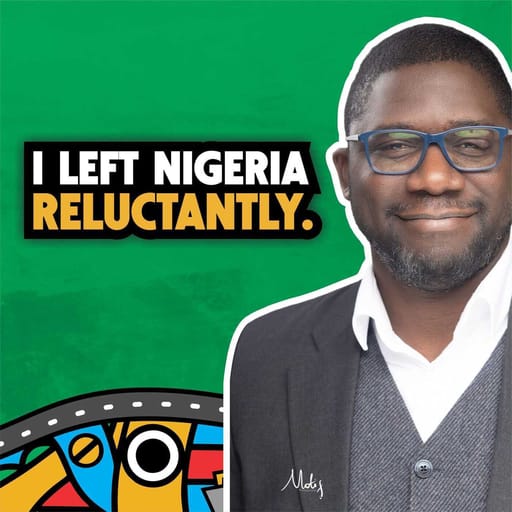
Transcript 0:00 Have you heard of what's called the black nod? You know, I mean, we talked about it in this interview with Dotun. But the interesting thing, and I, I did say that in the interview, is that 0:11 I was doing it way before I knew what it was or what it meant or what it was really called. I just did it. And then some dear friend says to me, "Oh, you know what's called the black nod?" And I'm like... 0:22 A- as he said it to me, I got it instantly. I, I-- He didn't even explain. You know, we'll let Dotun talk a bit about, you know, how he approached it when he moved to Canada. 0:31 [chuckles] That was something that was very common working Plus 15 downtown back in the day because we were so-- there were so few of us, right? There were so few of us. 0:41 So even if I couldn't stop to say hi, if I couldn't ask your name, if I couldn't ask where you worked, um, if there was no Black professionals, at least I give you the nod, you know, and tap my head or so- just something to acknowledge you that I see you, I'm going through the same thing, but hey, we are here, so let's make it count, right? 1:00 [upbeat music] First of, welcome. Um, I don't even... Like, I feel like there's so many questions to ask you, but I feel like I'll just start off with this question. 1:16 PwC, super experience in Nigeria. [chuckles] What even, what, what even made you start thinking of, "Okay, I'm gonna leave Nigeria." Like what? Wow. Okay. That's a, that's a- I went... 1:33 I came with the big guns, like I started with the big guns. Yeah, you can hear... You're hitting the nail. You're going right to it. So let... This is-- So this is, this is how-- This is my story. Um, 1:43 graduated industrial engineering in 2002, um, Ibadan. I've been in Iba- I was born in Ibadan, schooled in Ogbomoso. For secondary school, I was in boarding house for six years. Went back to Ibadan, UI. 1:54 My mom was a lecturer actually. Um, she retired as a professor in 2016. And I had act- I'd always told myself that I'd do my master's degree abroad, right? 2:07 So I was one of those guys that I wanted to do a master's abroad. However, I wasn't certain whether I was gonna stay in engineering or I was going to go into finance. 2:19 So in my head, I studied engineering, industrial and production engineering. However, there was a time in my life where there was this question around, you know, how... Who do you want to be in the boardroom? Mm-hmm. 2:32 Do you want to be the 32-year-old CFO who determines what lines get built, what expansion plans are undertaken, who gets hired, who gets fired? 2:48 Or do you want to be the 65-year-old chief engineer that cannot get his l- his line built, that cannot get the people he needs for his reliability plan hired, that's struggling to get the relevant, um, upgrades put in place for the safety of his personnel? 3:07 And that, that, um, that was very defining for me because it meant that I had to make a decision whether I was going to be a finance-focused engineer or a technical engineer. And the dec- the decision was very easy. 3:24 [chuckles] Yes. It was very, very easy. So even before I got a job at PricewaterhouseCoopers in 2005, I, I had spent some time reading the book, "Frank Woods." 3:36 I don't know who does that because I had finished NYSC, I hadn't gotten a job. I was at home, and I found the book in some corner of the house, and I just decided, "You know what? 3:49 Let me just read the first 10 chapters just for the s-sake of reading it," right? So I read about debits and credits, balance sheets, income statement, all that stuff, and 3:59 told myself that, "Well, maybe somewhere down the road, 10 years into my career, I'd get into finance and all that stuff." Nah. Four months later, I got a job with PwC, and that was the end of my engineering career. 4:11 [clears throat] That, that's exactly how it played out. So working in PwC at that time, great place to work, fantastic people. My... I still use that picture in my head. 4:25 In PwC, you have knowledge walking up and down the staircase, right? We... The office was at 252E Muritayo Okomola in Victoria Island at the time, and it was a four, three-story building with a staircase down the middle. 4:39 And in my head, the way I saw it was knowledge was walking up and down [chuckles] that staircase. So for me, having that kind of experience, remaining in Nigeria was a no-brainer. 4:53 But that wasn't the case, um, for my family at the time. There were challenges at work for my then spouse, and the first idea of going abroad was, okay, if I could not... 5:10 Because I tried to go for my master's. I never re- It never really panned out, either because I didn't apply on time or I didn't have the money. And then HSMP came around that 2006, '7, '8. 5:22 There are lots of HSMP ap-applications pro- to the UK that got approved, and- That's health and safety? No, uh, Highly Skilled Migrants Program. Oh, okay. Right. Oh, okay. Uh, there was a whole wave at the time. 5:35 A whole bunch of my colleagues moved to the UK be-within-- before the first five years. I stayed because I never really got around to, you know, doing it. 5:45 And then I tried to get back into, get into the oil and gas industry as an engineer. It didn't work out either. [sniffs] And then somebody started to talk about Canada, um, around 2009. 2000 and... Late '08, 2009. 5:59 And the personThe person was also a colleague then, and she talked about how her brother was there, you know, another one had come to Canada and then moved to the States. 6:08 I was like, "Okay, this Canada thing, let's see what's up." So I filled up a bunch of forms and sent it to Sydney, Nova Scotia, I believe was at that point in 2010, and I forgot about it. I totally forgot about it. 6:24 [sniffs] 28 months later, I got an email. I was driving, I can't forget, I was driving down on July, Emi. I was very close to the then headquarters of G- GTB before they moved- Yeah... the head office to Akin Adesola. 6:37 I, I, I was driving and then an email came in. Of course, there was traffic. So I was like, "Which email is this?" And I saw UCI number. I say, "Wetin be this? 419 or what?" 6:49 And I read the email and I was like, "Wow, okay. I didn't think this was ever gonna come." But it came 28 months after the application. 6:59 And at that time, things were getting testy really between myself and my bosses in PwC. I was-- I, I didn't go for my master's. I couldn't go to the UK for HSMP, with HSMP, and here was an opportunity for me. 7:15 I took it with both hands. [chuckles] Yeah. Because at the time, I, I, I didn't see... I, I believed in the Nigeria project honestly at the time, but I didn't see-- I was struggling to see my career progressing. Mm-hmm. 7:31 And with that, I decided, "You know what? Let's, let's go do something else. Let's go elsewhere." And O- and Canada opened up, and that was the story for me. 7:41 My, my faith in Nigeria as a project remained unwavering until, um, the time of the immediate past president, particularly his second tenure. [sniffs] Yeah. 7:52 But prior to that, I, I reluctantly left Nigeria, very reluctantly, but I did leave, and I, I do not begrudge that decision. I don't. I look back and I'm grateful I did. 8:08 Especially considering what's going on right now, right? My brother, yes. Yes. Yeah. It's a [sighs] some interesting times. Yes. So staying on that, like what was the change like for you? 8:26 I mean, like- [laughs] So day one, day one, right? Um, like a typical Nigerian, you want to start new things in a new year. [laughs] We-- That, that nuance just never goes away. 8:44 It never goes away. I'm sure you've heard that story over and over again. Oh, I do. I still do. So I, I, I put my- I have to mentally... [chuckles] I, I, I, I, I put my resignation at November 8:56 so that my last day will be January 31, so that when I arrive first thing in January, at least I have one month of pay coming from Lagos. That was my plan. I arrived on January 20, 2013 into... 9:12 Leaving Nigeria at 23 degrees, coming into Canada at minus 20 degrees. Bro, that cold smacked, smacked my face [laughs] stepping out of YYC. I was like, "What, what is this?" 9:30 I had no idea- You said me... what I was-- No, no idea what I was getting into. Nobody told me that coming in July, June, July, August may not be a bad idea. Forget the ticket prices. 9:39 At least you have to get to ease into the cold. Yeah. The cold was my first huge shock. 9:46 I, I was-- I'm grateful I had a friend who was already here at the time, so I stayed with him for two weeks before I got my place, and then I got a place. 9:54 And where I worked, my, my apartment was not too far from, um, the office. It was within the free train zone downtown at the time. So I, I didn't really suffer from the commute. 10:08 But, you know, there were a lot, a lo- a whole lot of differences. In Naija, wake up in the morning, get dressed, get into my car wearing my spiffy suit, feeling all irie with myself, drive to the island from Yaba. 10:22 It takes about an hour and a half or, um, right? Get into the office, work till about 5:00, 6:00, 7:00 on good days, 10:00 on bad days, right? And then drive back home. 10:35 Here, I get out of my apartment at 8:30, ride the train for 10 minutes, and I'm in my office before quarter to ni- quarter to 9:00. That was a difference. Um, 10:48 at the time, riding the train, I was literally the only person speaking Yoruba on the train, um, talk because I was talking to somebody back home. Yeah. 10:59 These days you get on the train and there's one guy talking Pidgin, another guy talking Yoruba, another guy... [laughs] So I'm grateful for that because our numbers have swelled. Yeah. However, back, back then, 11:11 um, I don't know whether you've heard about the nod. Oh, yeah. You see kind of a Black guy and you're just like- Oh, yeah. 11:19 Like- That, that was something that was very common walking plus 15s downtown back in the day because we were so f- there were so few of us, right? There were so few of us. Oh, yeah. 11:29 So even if I couldn't stop to say hi, if I couldn't ask your name, if I couldn't ask where you worked, um, if there was no Black- You would just nod... 11:37 person else, at least I give you the nod, you know, and tap my head or so- just something to acknowledge you that I see you. I'm going through the same thing, but hey, we're here, so let's make it count, right? 11:48 That was- Yeah... that was my own, that was my own experience. Those are some of the things I, I, I, I, um, some differences that I experienced. Because, hey, 11:57 back home the, every Black person was a Black person, so it did not matter. Yeah. I- the nod was not a thing. But I very, very quickly adapted to the nodRight. Walking do- walking through downtown. 12:09 There are many other things like that, but that one is one that till, till today is still something I do. 12:14 And, and I do it not because I know every Black person, because I want to acknowledge you, because I see you and I'm like, whether it's you that came or it's your folks, you're a ways away from home. Yeah. 12:26 You know, you know what I find interesting is that I feel like it even happens unconsciously. Here's why. I did not h- know about it, but I've been nodding right from when I landed. 12:37 [laughs] And then someone tells me someday, "Do you know what's called the Black nod?" And instantly- You recognized it because you've been participating- I recognized it... in it for a while. 12:47 [laughs] Because I've been parti- Like, and let me tell you how wild it is. I landed here 2021. I heard about the Black nod last year. 12:53 So literally, I had been nodding since 2021, and then someone tells me last year, summer last year. 12:59 I was actually out with the kids in the park, and then was talking to a friend, and he's like, we're talking about something, he talked about the Black nod. I'm like, "Gosh, I do it." [laughs] Like- It's, it's real... 13:13 you, you, you just do it. Yeah, you just do it. You just do it. You just do it. You just do it. Like, it's... 13:19 Gosh, like, you know, you know, I've been exploring this thing called shared consciousness a lot these days, and I just feel like there's so many things that we're-- The human brain is-- The, the world's an interesting place, but that's a topic for another day. 13:28 Let's not get into all that stuff. But- Mm-mm. Let's not. But the, the, the fact that there are so many things that we're all going through that, 13:35 um, the best that we can do for ourselves is to talk about them so that we recogni- we recognize that, okay, you're not alone. And I, I believe that one of the best things that you can do for humanity 13:51 is to let people know that they're not alone in whatever they're going through. Whether it's good or bad, the, the more you feel like there is a community around you, the more likely that you are going to 14:04 feel better, do better, thrive, live. Whereas if you feel alone and isolated, the pain, the pain of... 14:15 Even when people are rich, when they f- when they're alone and wealthy, the result is still, it's, it's not, it's not cool. It's not good. It's not fun, right? 14:25 So community, in that sense, community seems to be more powerful and, um, more useful to us than wealth and, um, opulence, I dare say, right? Yeah. 14:42 You know, and I totally agree 'cause there's this quote, um, by some lady. I, her name is, she's Polish, so I don't know if I can pronounce her name properly without reading it while I'm pronouncing it. 14:51 [laughs] But sh- it's a really long quote. But I think for me it-- And that's why I'm doing this "Newcomers" thing, because she says that history has to be told from different prisms. Mm. 15:01 There's so many s- Like, there's history, but history from one view is not history. Yeah. It's just someone's perspective. True. True. True. True. Everybody has their own view of the history- Mm... 15:15 and you can only know the full history when you hear all sides of it. All sides. The story told by the lion and the story told by the hunter- Are two different things... they're two different things. 15:26 They are two different things. Two different stories. I to- I totally agree with that. Two different stories. I totally agree with that. 15:29 That's, that's why I can't, um, I can't stop crediting Chimamanda Az- Adichie's talk about the, I think she called it the single, the danger of a single story or something like that. Mm. Mm. Yes. 15:42 I, I can't forget that because it made me think about things very differently. Um, I shouldn't be referencing "Game of Thrones" but I ref- reference it all the time. 15:52 [laughs] At the end of season, I think it was season eight, the very last season, when the, what's her name now? The big, the lady- Yeah... the lady warrior start- decided to write the story of Jaime Lannister. 16:07 She wrote it like he was the best thing since sliced bread. But guess what? We all know who Jaime was. [laughs] Jaime was all s- sorts of evil, horrid- Yeah... bad. 16:19 There was, there was very li- He w- There, he had some good in him, but the good was smidgen compared to the rest of him. But the story- But that's her story... that, that's her story of him, right? Yeah. 16:30 So a- at the end of the day, you're, you're correct in that the story must be told from multiple perspectives for us to really get a view of what went down. Yeah? Yeah. 16:40 And I appreciate you doing this because we get to see the perspectives of immigrant life, and then people get the opportunity to choose how they want to approach it, whether they want to- Mm... 16:52 go with their history or their possible future- Mm-hmm... or adapt from multiple communities to build a life. Yeah. But as long as people don't get that opportunity of choice, we, we do ourselves a disservice. 17:09 So thank you for doing this. Thank you so much. Thank you. I appreciate that. But I'm still gonna stay on that emotion of, uh, change. [laughs] Yeah. Yeah. So I think for me it's like, 17:22 how did y- you came with your spouse, right? Yes. So how did you all deal with the emotions of s- that come with starting afresh? Like, you know, there was the cold, yes? Yes. How did you deal with all that? Like, 17:36 what did it feel like? So there's, the first, the, the immediate one was the cold, then there was money. Because every time you spent a dollar, you are multiplying by, uh, the exchange rate. Naira. 17:50 It took, I think it took me about three and a half, four years to stop doing that. I'd calc- I'll buy a cup of coffee- It takes a while... and be like, "Whoa, this is 500 naira. 500." [laughs] It takes a while. 18:02 It takes a while. Right? I agree. Um, I'll go into a shop buying clothes, and I'll pick it up and put it down, say, "No, no, no, I'm not spend- Nah, stop it. I'm not doing that thing." 18:13 Took me about three, four years to get to the point where I'll be like, "Look, I'm not in Nigeria anymore. If, it's dollar they spend here- Gosh... I need to get used to it. 18:21 Earn in dollars, spend in dollars, and be done." That was one.Um, another one was the whole idea of, you know, suddenly relationships were not the same. There are people that you felt you are close to before back home 18:40 that you are not as close even though you are physically in proximity. And there are people that were just distant back in the day that suddenly it's almost like they are now your five and six, right? 18:53 They are five and you are six, or they are six and, uh, you know, you are five and they are six, um, because of the location, the change in location. 19:03 Then of course, there was all the designation and certification requirements, right? Suddenly my Nigerian ICAN was, wasn't, um... W-well, in all honesty it wasn't. 19:16 So I had, I had the combining that with my PwC experience gave me a lot of professional benefit because at the end of the day, I had to write, um, one e- I ended up writing one exam. I did a presentation and then... 19:31 In fact, I just wrote an exam. That was it, right? So I had all the backstory. 19:37 There are people now who have to write 10, 14 exams even though they have the same ICAN, but they didn't have the quality of experience that I had, right? 19:45 So the, the fact that I had worked with PwC did count for something, um, as far as professional was concerned. But I look back and I'm like, there was that whole pro- period where even just 19:59 riling myself or psyching myself up enough to get to the point where I'd register for the exams and go take them was a professional challenge, and it was there. 20:08 But I was blessed with the opportunity that it was not a gate to my career restarting. I had people who recognized my experience and my competencies and gave me work to match it without me getting Canadian equivalency. 20:25 But where we are today, professionally, that challenge is there, right? The, the... It did not impact me, but it doesn't change the fact that it exists, right? So that was another, um, another barrier. 20:38 Then of course, the food, right? Um, sandwiches don't taste as nice as, um, you know- Amala. [chuckles] My brother, please. It's not the same. There's, there's, there's, there's, there's even the one where 20:54 I feel like, so like you come here and if you're not careful, you start to deal with blood sugar issues because 21:04 you're just eating a lot of stuff that you should- that normally back home you don't eat, you eat or you don't eat all that. Like, oh, there's sa- there's... That's a very, something people don't think is true. 21:15 So, so let me, so let me give you my perspective on that. The fact is this, um, and I know that I'm going to take flak for this, but bubs, Nigerian food is not healthy. 21:30 [laughs] Amala, eba, iyan every day. Every day at 8:30, 9:00, 10:00 PM with two or three pieces of chunky meat. It's a recipe, long-term recipe for high blood pressure and, 21:46 and diabetes and all that stuff, right? That's, that's just the truth. So one thing that coming here did for me was it made me start to look at my calorie count and my consumption, and then I start- I would dial back. 22:02 So if I'm not- Mm-hmm. I, I became health con- I became more health conscious than I was in Nigeria. In Nigeria, it didn't, didn't, it wasn't a thing. Yeah. I go to work, come back and eat, period. That was it. Mm-hmm. 22:13 Right? Whether I had lunch or not was irrelevant. I get home and I'll eat a good dinner. Now I'm sitting down, I'm like, "Mm, skip the lunch so that I eat a, an okay dinner." 22:24 But not the kind of dinners we used to eat back home. That, you know, steaming hot pile of amala with two or three pieces of meat and soup, whether it's efo or egusi as the case may be. 22:36 I, I, I, I, I'm grateful that I got that opportunity because I can tell you for free that if I was in Nigeria, forget it. I'm not gonna be... I, it wasn't, it was just wasn't going to be a thing. It wasn't. 22:47 I didn't, I didn't... Well, at the time I didn't think it was ever going to be a thing. Mm-hmm. But now I've adjusted so much that, you know, working out is part of my life. I've come to that point. 22:58 I've made e- e- exercise part of my life. Um, I'm not sure that I would've succeeded in doing that if I, if I was still back home, right? So that's, that's another, that's another... 23:09 There, there, there'd be a whole ma- It's literally every facet of life changed- Yeah... and you have to keep making choices. And some of those choices have been great, some not so great. [laughs] But it is what it is. 23:23 Talking about- You move. Talk- But talking about choices, like what did you think the country was going to be like when you moved? Did you have any preconceived notions? Well, um, I don't know what I was thinking. 23:37 As a child, as a child, I watched the 1988 Winter Olympics on NTA. You know, NTA has a... Back then they used to show all these very funny shows. Yeah. 23:49 A German show called "Telematch" where people used to do all sorts of crazy sporting-like things. Yes, I remember that Right? 23:56 They had all those kind of shows, and that same way they did broadcast the 1988 Win- Winter Olympics. So somewhere in my mind, the city of Calgary existed, but I never at any point thought I would live in Calgary. 24:12 However, when it was time to choose a spot to land, Calgary was a no-brainer. I was an accountant working with oil and gas companies. Calgary was headquarters for oil and gas in CanadaNo thinking required. 24:27 I flew straight into Calgary, and I've lived in Calgary since then. There was no desire to go to Toronto, no desire to go to Ottawa. Calgary was it, and Calgary remains it, right? So from, from that perspective, um, 24:44 those-- that was one of the things that I, I could easily say I didn't have to think much about, right, when I made the decision. But I- like, like I said, as a child growing up, I never thought about Calgary. 25:00 But when I got here and I saw the towers, like I remember all this. And I- [chuckles]... I watched a movie, Eddie-- movie about Eddie the Eagle, the British guy who became a, a, a, a jumper on, right? 25:13 I look back and I'm like, "How, how did I..." I remember as a child watching this place being beamed to the world, and then suddenly now I live here. That was my experience. 25:25 [chuckles] I find that interesting. Now let me go back to something you've been talking about in passing. Yeah. Finding a job. How did that go? Whoa. 25:39 So, so I, I, I-- and I'll be honest here, I consider myself a spoiled immigrant. Mm-hmm. So did I have my disappointments in the job search process? Of course. Um, I had... 25:53 I was leaving Nigeria at the point where immigrating to Canada was not, it wasn't popular. There were a few people doing it, not very many, and Canadian employers were not looking to hire Nigerians. Mm. 26:07 However, they were looking to hire immigrants because, well, the educational system was not producing enough people to meet up the demand- Yeah... at the time. 26:18 So being in PwC Nigeria, of course, I applied to PwC here in Calgary, got an interview, expecting an offer, and that offer did not come. 26:29 Problem was I had put in my resignation with a three-month notice, and my resignation was already like a month, like already two months old at that time. So I was more like two-thirds through my waiting period, 26:45 right, when it became clear that the job was not gonna come. And initially, I was gonna say, "You know what? Maybe I should just stay, right, and give it some more time." 26:56 But something inside me said, "Look, you, let's just, let's just... Whatever is happening, whatever they are doing there, we'll go and do there. Let's go. We're not staying," right? 27:05 And then somebody reached out to me one Friday night and said, "Hey, you know what? I know this guy. He's coming to Calgary. 27:11 He's coming to Calgary because somebody that fits a role that you fit, that fits, that is in a role that you will fit in has basically gone MIA, and they need somebody like desperately. And they know me. 27:26 They know you because they know me because, hey, it's, it's PwC, right? You would fit in there. So, um, go have a... I'll, I'll let him know." Friday night I get a call, go into an office, have an interview on Saturday. 27:40 I go into the office, have the interview, and then on Sunday I get a call, "Show up in the office on Monday morning, pick up your laptop, get started, and then fly out on Friday, report in Calgary on Monday morning." 27:53 What the? That was my experience. Honestly, that was my experience. [sniffs] And what that meant for me was I hit Calgary Sunday afternoon, and Monday morning my host was trying to get me to my office 28:12 because I had no idea how to get around town. [chuckles] So that, that was my own experience. Um, I, until 28:24 that organization closed their doors in Canada three and a half years later, I had no idea what it was like to be in the city, writing resumes, trying to get the door open. You were balling. I had no idea. 28:38 I-- so my, my... And, and it wasn't an easy life because I was working with an organization that was eight time zones away, right? Mm. So they are coming into the office at about midnight here. 28:52 I'm seeing emails, I'm responding to emails because I'm the only one here, and then the whole team over there, they're sending me emails, I'm responding. 29:01 So sometimes I'd be up till about 3:00 AM, 4:00 AM, then go to bed, then try to be in the office at 8:00 to catch the last hour of their day. 29:11 Then I'll work my own day and then pick up again, and that's how I lived for almost two years. That was my life for two years, right? 29:22 So even though it was great to, you know, get a job before I hit the ground, um, my own sacrifice was I lived in two time zones, and I worked, I worked in those two time zones. Um, 29:38 and that's, whatever that means in terms of time- Mm-hmm... effort, the wear and tear on the body, health, all of that, I experienced it full on firsthand, um, before they shut their doors. 29:53 The moment when the door was shut, then I was back to Robert Half and David Appling and Hays Recruiting and sending out my CV and trying to see what kind of attention I could get because I still hadn't gotten my designation, 30:07 right? Because I had a job, I didn't really need the designation, so who cares? I needed it now, so I need to, needed to do something quickly after. Um, but from that, 30:17 that perspective, you know, I, I, I did go through that challenge eventually. 30:23 And the relationships I built while workingWere the relationships that helped me secure the position in EY, were the relationships that, you know, have become valid and valuable for me today, opening doors as far as progressing my career to the point where it's at at the moment. 30:43 So where's your career at right now? Okay. So my name is-- This is how I run my introduction. My name is Ayomidotun Ayodele Bamishaiye. I'm principal at Dexteritas Professional Corporation. 30:55 We are a full service accounting firm in the city of Calgary, serving clients from coast to coast to coast. We provide- So, so you run your thing now. You [chuckles] Yeah, yeah, yeah, yeah. I, I, I run my own shop. 31:09 So I have a team of, um, seven of us at the moment, and we do the full gamut of accounting and assurance services. So we do bookkeeping, personal taxes, corporate taxes, um, provide consulting. 31:24 We do quite a bit of work with not-for-profits and condo corporations at the moment. Um, audits, review engagements, that, that kind of stuff. That's, that's really the bread and butter. 31:35 Um, and you know, right now this is 22nd of February, so we know what that means, right? Tax season. Time to file taxes. Tax season. 31:44 [chuckles] So, uh, part, part of a good chunk of the work that we do is with corporate and personal taxes, right? Quite, quite some work there. And, um, I'm, I'm happy to... 31:58 Over the years, I've had the opportunity to provide that kind of knowledge, whether within the community, within specific groups within the community, or generally using social media to, you know, share what I know. 32:11 Uh, but for me, that's, that's one thing that has proven to be a, a strong connector to the community- Mm-hmm... and an opportunity to add value, right? That's, that's how it's, uh, how it's been. 32:24 So for, for the services that we provide at the moment, we are doing, um, we're doing quite a bit as far as personal tax is, is concerned. Yeah. Uh, going into the specifics of it, 32:37 we are currently having our clients register to have their taxes done. The CRA just opened up the system on Monday, so people are-- have actually started filing their taxes. 32:48 But to avoid some of the challenges I've had in previous years, I'm asking that our clients sign up to have their taxes, um, prepared, and that just helps me to manage the flow of the work as well as my own resource and capacity, right, as a business. 33:06 So it's, um, it's been an interesting experience actually owning and running a business. 33:13 [chuckles] Like, I wanna ask you about your business, uh, but I feel like I'll probably leave that for another time, maybe some other episode or something. But I really want... 33:20 Now, now since you're talking about tax, like, because yeah, like everyone, like, you know, one thing- Yeah, everybody files taxes. Once you are 18, you must file a taxes, so you need to know something. 33:29 [chuckles] One thing you quickly learn as an immigrant is that tax season is big time season. There's no- Yep. You can't shirk. So like how do you prepare for the, for tax season? 33:38 Like what are your thoughts on preparing for tax season, either before, before tax season hits, um, you know, like how best to prepare for it? Fantastic. I like the word you used, best. 33:48 If you're gonna prepare to, for your personal taxes, the best time to start is one year in advance. That's just the truth. 33:56 And I say that because when you start preparing for taxes in January or February of the year after, the, a lot of the opportunity is already lost. That's just the truth. So, you know, it's like you have a, you have a, 34:14 you have a buffet, right? But you show up at the buffet, um, 20 minutes to closing. You-- I'm sure you've, you've, you've been in Holiday Inn or, you know, one of those budget hotels that have buffet from 6:00 a.m. 34:31 to 10:00 a.m. And we all get there at 9:30. [chuckles] But the guys that enjoy the buffet are the guys that show up at 6:00 a.m. because they are catching a, an 8, an 8:00 a.m. flight. They get the best of everything. 34:46 So when you start preparing for your taxes January of the following year, you are effectively the guy showing up 30 minutes to the end of the buffet. You're getting the scraps. There's nothing anybody can do about that. 34:57 So if you wanna... The best approach, right, to preparing for your taxes, in my view, the first question to ask is where is your money coming from? How are you earning your income? 35:09 That's the quest- that's always the first question. Because if you are not thinking about how you are earning your income, then the opportunities and advantages that are available to you are, are basically left to 35:24 other people to make decisions for you. And guess what? The government has made all those decisions in the tax laws. So you now sit down and say, "Okay, what credits can I claim? Okay, I have a child." Good. 35:37 You have a child. The chi- having a child means that you get some relief for having a dependent, and probably you get Canada Child Benefit. Okay, um, you made a contribution to RRSP. Fantastic. 35:49 Okay, that means that your, um, taxable income is reduced by that amount before you determine your tax bill. Oh, you made some charitable donations. Excellent. 35:59 We'll reduce your tax bill by whatever the fa- right factor on that, um, donation is. But when you ask yourself, "How am I earning?" What that allows you to do is you suddenly are in control of all the gears and levers, 36:19 as in there's a full awareness of the myriad of opportunities available to you, and then you can say, "Okay, I don't wanna earn this way. I want to earn this other way. I don't want to earn as an employee. 36:30 I want to earn as a business owner," or, "I don't want to earn as a business owner. I have this-- I came from Nigeria with $1 million, so I want to earn through whatever interest that gives me."Right? 36:44 But if you're not thinking about it, all the opportunities available to you in that spectrum is lost. Do you get? So I always like to s- ask people, "How are you earning or how do you intend to earn?" 37:02 Because that is a much, much, um... That gives you way more leeway than just chasing the credits around. There are lots of credits you can claim. 37:13 For example, there's a $3,000 credit w- for volunteering with the fire, with the fire service or search and rescue. It's not common in our community, but it doesn't take a lot to do. 37:25 All you need to do is volunteer 200 hours a year. 200 hours a year is the equivalent of, um, 15 hours a month, right? 15 hours a month can very easily be two weekends, 37:42 and that gives you a $3,000 credit right there. But nobody's thinking about it. Nobody's thinking about it. They-- We are not making our decisions from that perspective, from that lens. Yeah. 37:52 So I always like to say, "Hey, stop. Let's go back. You know, don't jump in at the middle and start chasing credits. Let's go to the very top," and say, "How are you earning this money?" Right? 38:04 I once somebody, saw somebody, saw a tax return of somebody who earned $100,000 in income, gross income. However, less than 10,000 of it was taxable, right? Mm. That's because the guy knew what he was doing. 38:22 He thought about it. What? Pl- yeah. Planned for it. Set himself up properly to be in that position. What? Yeah. $10,000 was his taxable income, so he was low income. He got every grant and benefit in the book. 38:38 But when you go back and look at the tax return, he earned $100,000 gross income. If you're not thinking about it, those kind of opportunities are gone, right? 38:50 [clears throat] From my perspective, like I reiterate again, is start from the very top. How are you earning your income before you start chasing credits around? [laughing] I have to come meet you over at tax. 39:08 Don't worry, I'll take, I'll take an appointment with you any day. [chuckles] Any day. That is, that is interesting, to be honest. Yeah. Yeah. Yeah. Yeah. 39:18 So like, like, you know, what I keep saying is this: if you think about your taxes in advance, it's after, after buying a house, the next big- biggest bill, which you will pay for longer, is taxes. 39:35 So if you think about it from that perspective, you will sit down and say, "Okay, how much..." When you are planning for the year, 39:42 how much do I want to earn and what is the tax implication, and how can I ensure that I am paying what I should pay and no more? That should be one of the questions to ask, right? Okay. And so 39:58 I will shamelessly plug in the fact that we actually help our clients, um, who s- who subscribe to the service to take a look at their, how they earn, 40:10 what their bill looks like for taxes, and how they can better manage that bill. How c- they can better optimize that bill. 40:19 So for example, if you sign up for us to prepare your taxes at taxfiling.dexteritas.ca, um, when you sign up there and you are trying to 40:30 check out, you know, your appointment, you'll actually be able to sign up to have your taxes prep- you, you know, re- for us to review or preview what your bill looks like, and then we can look into your personal situation to take advantage of potential opportunities that may still be available to you. 40:51 And if we don't find anything available to you, then we'll advise you of all the changes you could have made that will put you in a better position, so that with 2024 taxes in mind, you can proactively make the right decisions. 41:09 So that's a bump that you'll find on our, um, tax preparation service, which you can take advantage of. But the goal is simple: you should pay no taxes, no more than you need to. 41:24 But that can only happen if you plan for it or prepare for it. Hmm. [chuckles] Like, I'm gonna keep that. I've, I've, I've g- I have, have to sign up for that. 41:43 [laughing] That's, that's, for me, it's a game, it's a game, it's a game-changing service. Um, some people will say, "Oh yeah, but isn't that part of what you should do when you are preparing?" 41:53 I always say that tax planning and tax compliance are two different things. Yeah. It's one thing for me to help you to keep, to comply with the law. 42:01 It's another thing for me to advise you on how you can improve your position. Some people will say CPA needs to advise, and I'm like, "Advisory services and compliance services are two different services." 42:14 I will support you with the compliance if you sign up for it, and I will support you with the advisory if you sign up for it, but there's no requirement for me to provide advisory services for free, because advisory services come with liability and responsibility. 42:29 Yeah. If the advice doesn't work, then suddenly you're like, "Yeah, you're a CPA and I wanna string you out." Yeah. And I'm like, "Well, I didn't pay." 42:39 So if you want the advice, let's settle down in a conversation and support you properly, and that's, that's really what I'm doing for my clients more these days.I think I'm gonna end this here 'cause like, [laughs] I feel like, like I need to go think about this thing you just said right now. 42:55 And I, I expect whoever is listening to think about it too- Mm-hmm... because like it's taxes in, man. It is the time. This is the time. It's the time. So this is it. Yeah. This is it. So thank you. [laughs] Thanks, man. 43:06 Thanks for having me. It's, uh, it's a pleasure to be here. Um- Honestly, thanks. I remember meeting you at the North Collective event. I think that was-- Is that two years ago now? That's two years ago. 43:15 No, it's just one year ago. It's, uh, last, last- Was that 2023 or 2022? One-- February, February 2023. February 2023. Okay. Feels- Yeah. Feels like... So it's about a year ago, right? Yeah. 43:24 I remember meeting you for the first time there, and I was like, "Interesting fellow." Okay. [laughs] And since then, you've been showing up on my LinkedIn feed with your, with this particular podcast. 43:33 First it was all the Efiko stuff, then this podcast and, um, I'm happy we get to do this chat. Well- And I'm also here- Yeah, same here, honestly... 43:42 looking forward to, you know, being able to support the community because the kind of things that we're talking about in, on this conversation earlier, um, you know, before we started recording about how- Yeah... 43:55 we need to, as a deprived people, we need to grow beyond our deprivation and start to look into legacy and why, well, the, the light is always brightest. 44:09 The darker, like I said before, the darker the lights, the, the darker the night, the brighter the light. Yeah. 44:15 So it's for us to be lights until there is no more darkness in the community, and it's, it's on us to do, right? So thank you for doing this as well. [outro jingle] [laughs] That was a good conversation. 44:30 I really enjoyed talking to Dotun, and I hope you enjoyed it, enjoyed it as much as I did. Please, as usual, as I always say, and please never get tired of hearing this from me, please just like, subscribe, share. 44:43 We're on Substack, YouTube, Spotify, Apple Podcast. Anywhere you get your podcasts, we're on there. Thank you so much for all your support. We appreciate that. Have a beautiful day. [outro jingle]